Autonomic Dysfunction in AL Amyloidosis and Orthostatic Hypotension
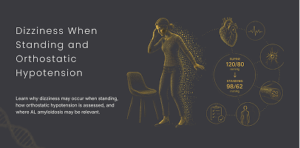
Autonomic dysfunction can affect involuntary body functions such as blood pressure, heart rate, digestion, sweating, bladder function, and body temperature. When blood-pressure regulation is affected, some people may experience dizziness, lightheadedness, blurred vision, weakness, or fainting after standing.
Orthostatic hypotension is one possible reason these symptoms can occur. It has many potential causes, including medication effects, dehydration, heart conditions, endocrine disorders, neurological conditions, and autonomic dysfunction.
In some people, AL amyloidosis may involve nerves that support autonomic functions. This can contribute to difficulties regulating blood pressure during position changes. However, autonomic involvement is not present in everyone with AL amyloidosis, and these symptoms can occur in many other health conditions.
For this reason, healthcare professionals interpret symptoms, blood-pressure changes, medication history, and other clinical findings together rather than relying on a single symptom or reading.
| TL;DR |
| Autonomic dysfunction affects involuntary body functions, including blood-pressure regulation, heart rate, digestion, sweating, bladder function, and temperature regulation.Orthostatic hypotension is one possible manifestation of autonomic dysfunction, but it can also have many other causes.In some people, AL amyloidosis may involve autonomic nerves and contribute to symptoms after standing, such as dizziness, lightheadedness, blurred vision, weakness, or fainting.A limited heart-rate response during a blood-pressure drop can be one clinical clue, but it cannot identify the cause on its own.Healthcare professionals assess symptoms and blood-pressure changes alongside medical history, medications, examination findings, and other testing when appropriate. |
What Autonomic Dysfunction Means
Autonomic dysfunction refers to impaired function of the autonomic nervous system. This part of the nervous system regulates involuntary processes that help the body adapt to everyday demands, including blood pressure, heart rate, digestion, sweating, bladder function, and body temperature.
When autonomic function is affected, the body may have more difficulty adjusting circulation during position changes. This can contribute to symptoms such as dizziness, lightheadedness, blurred vision, weakness, or fainting after standing.
Autonomic dysfunction can have many possible causes, including certain neurological conditions, diabetes, medications, and amyloidosis (in some people).
How the Autonomic Nervous System Regulates Blood Pressure
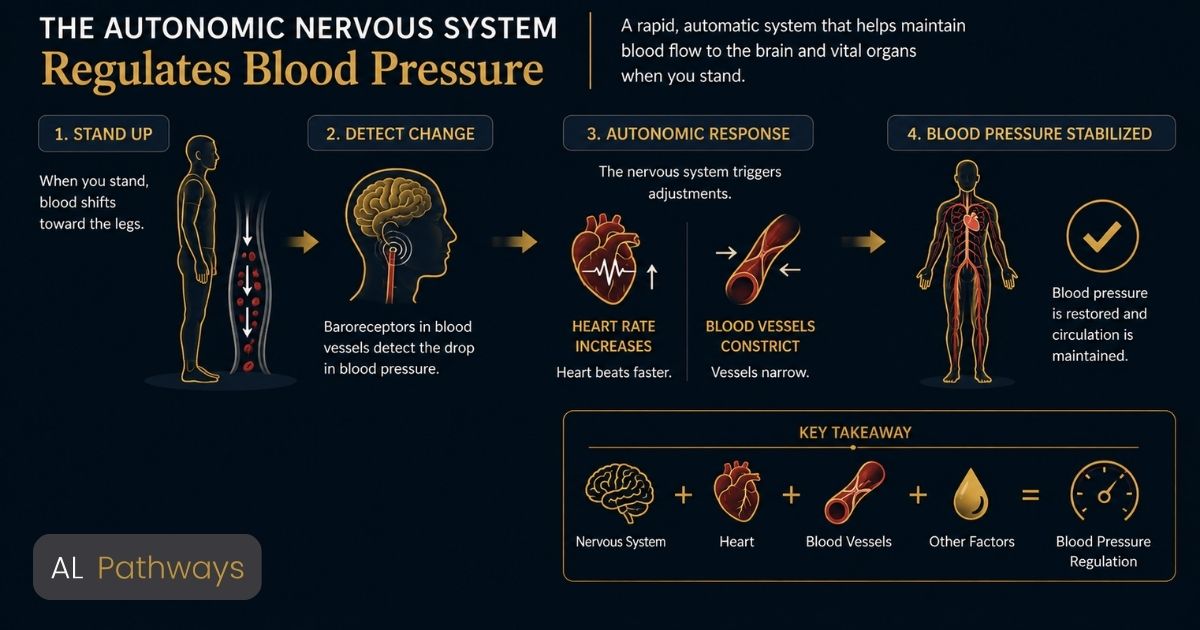
When a person stands, gravity causes some blood to shift toward the legs and abdomen. The body normally responds within seconds to maintain blood flow to the brain and other vital organs.
The autonomic nervous system helps coordinate this response. Baroreceptors in the carotid arteries and aortic arch detect changes in blood pressure and signal the body to make rapid adjustments. These adjustments may include a modest increase in heart rate and narrowing of blood vessels to support circulation.
When this response is impaired, blood pressure may fall after standing. The result can be orthostatic symptoms, including lightheadedness, blurred vision, weakness, or a feeling of near-fainting.
How AL Amyloidosis May Affect Autonomic Nerves
AL amyloidosis is a condition in which abnormal immunoglobulin light chains produced by plasma cells form amyloid fibrils that can deposit in tissues and organs.
In some people, AL amyloidosis may involve peripheral nerves, including nerves that support autonomic functions. This is known as autonomic neuropathy.
Autonomic neuropathy may affect the body’s ability to regulate blood pressure during position changes. It may also affect other involuntary functions, including digestion, sweating, bladder function, or sexual function, although symptoms and severity vary between individuals.
Autonomic involvement is not present in everyone with AL amyloidosis. Symptoms, affected organs, and the extent of nerve involvement can vary considerably from person to person.
Orthostatic Hypotension as One Possible Manifestation
Orthostatic hypotension is a sustained drop in blood pressure after standing. Healthcare professionals generally define it as a decrease of at least 20 mmHg in systolic blood pressure or at least 10 mmHg in diastolic blood pressure within three minutes of standing.
In people with autonomic dysfunction, the body may not adjust heart rate and blood-vessel tone effectively enough to maintain blood pressure during position changes. This may contribute to orthostatic hypotension.
A reduced heart-rate response during a blood-pressure drop can be one clinical clue that helps healthcare professionals consider neurogenic orthostatic hypotension. However, this pattern does not confirm the cause on its own. Medications, heart conditions, hydration status, other neurological conditions, and several additional factors can influence blood pressure and heart-rate responses.
For this reason, symptoms and readings need to be interpreted as part of a broader clinical evaluation.
How Clinicians Evaluate Possible Autonomic Involvement
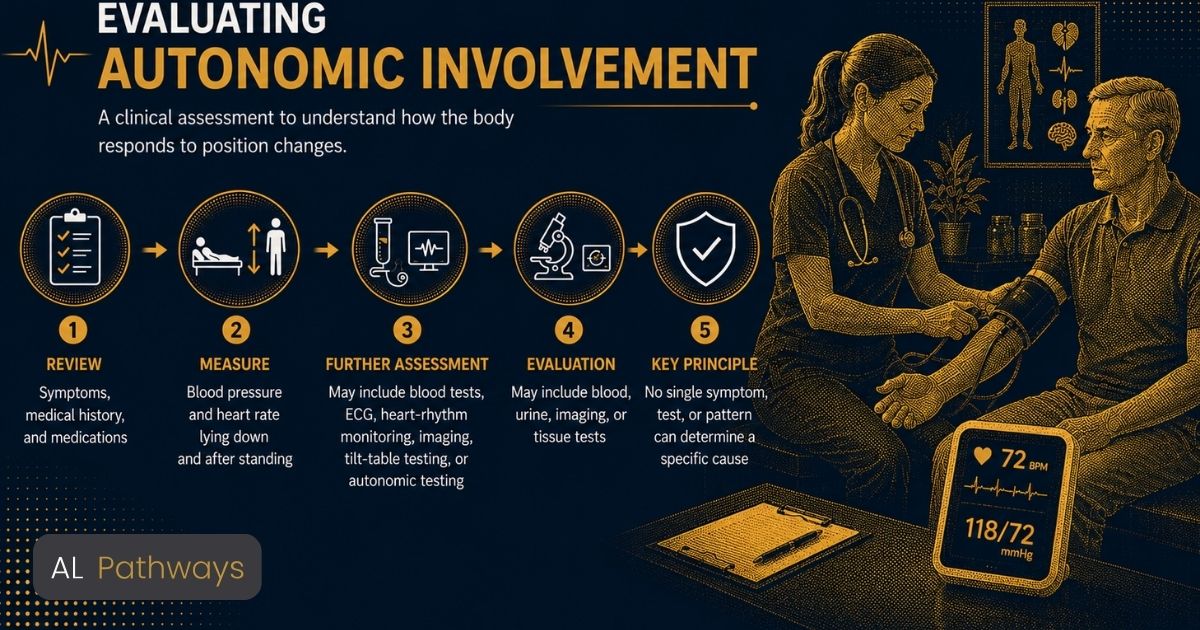
Evaluation usually begins with a review of symptoms, medical history, current medications, and other health conditions that may affect blood pressure or circulation.
Healthcare professionals may measure blood pressure and heart rate while lying down and after standing. Depending on the clinical situation, further assessment may include blood tests, electrocardiograms, heart-rhythm monitoring, echocardiograms, tilt-table testing, or specialized autonomic testing.
When AL amyloidosis is part of the clinical concern, evaluation may also include blood and urine studies, imaging, and tissue testing to determine whether amyloid deposits are present and identify the specific amyloid type.
No single symptom, blood-pressure reading, or heart-rate pattern can determine whether AL amyloidosis or autonomic neuropathy is present.
Patterns That May Be Helpful to Document
Keeping organized notes can help patients and caregivers describe symptoms more clearly during medical appointments. This information is not intended to identify a cause, but it may provide useful context for a healthcare professional.
Helpful details may include:
- When symptoms occur, such as after standing, after meals, during activity, or at certain times of day
- How often symptoms occur and how long they last
- Associated symptoms, such as blurred vision, palpitations, fatigue, fainting, digestive changes, or swelling
- Current medications and recent medication changes
- Blood-pressure readings, if they are already being monitored at home
- Recent illnesses, changes in eating or drinking, weight changes, or new diagnoses
- Previous testing, medical visits, or hospitalizations related to the symptoms
Questions to Consider Discussing With a Healthcare Professional
- What factors could be contributing to these symptoms?
- Could any current medications or recent medication changes be relevant?
- Are there signs that autonomic dysfunction may need further evaluation?
- What information would be most useful to track between appointments?
- Are additional tests or follow-up evaluations appropriate?
- Are there symptoms that should be reported promptly if they worsen or change?
Seek prompt medical attention for fainting, dizziness accompanied by chest pain or severe shortness of breath, a fall or injury, or symptoms that are sudden or significantly worsening.
Frequently Asked Questions
What is autonomic dysfunction?
Autonomic dysfunction refers to impaired function of the autonomic nervous system, which regulates involuntary processes such as blood pressure, heart rate, digestion, sweating, bladder function, and temperature regulation.
Can AL amyloidosis affect autonomic function?
In some people, AL amyloidosis may involve nerves that support autonomic functions. This can contribute to symptoms related to blood-pressure regulation, digestion, bladder function, sweating, or other involuntary processes. The pattern and severity of symptoms vary between individuals.
Can autonomic dysfunction cause orthostatic hypotension?
Yes. When autonomic nerve signaling is impaired, the body may have difficulty adjusting blood-vessel tone and heart rate after standing. This can contribute to orthostatic hypotension in some people.
Can heart-rate patterns help clinicians evaluate neurogenic orthostatic hypotension?
A limited heart-rate response during a blood-pressure drop can be one clinical clue. However, it does not establish the cause on its own. Healthcare professionals interpret blood-pressure and heart-rate findings alongside medications, medical history, physical examination findings, and other testing when appropriate.
Can dizziness or blood-pressure changes occur without AL amyloidosis?
Yes. Dizziness and orthostatic hypotension can have many possible causes, including dehydration, medication effects, heart conditions, endocrine disorders, nervous system disorders, and other health factors.
How do clinicians evaluate possible autonomic involvement?
Evaluation may include a review of symptoms, medical history, medications, blood-pressure and heart-rate measurements in different positions, and additional testing when clinically appropriate. Specialized autonomic testing may be considered in some situations.
What information may be helpful to document before an appointment?
Helpful information may include symptom timing, frequency, duration, associated symptoms, medication changes, blood-pressure readings if already available, and other recent health changes.
Disclaimer: This content is provided strictly for general educational and informational purposes as a baseline structural framework and does not constitute medical, legal, or professional advice, nor does it establish any doctor-patient, attorney-client, or fiduciary relationship. This material falls under strict digital health content quality standards and must never be used as a substitute for professional clinical evaluation, diagnostic screening, or specialized treatment paths; readers must always consult a licensed medical professional or specialized physician regarding any health concerns and should never delay seeking care based on this content. To the maximum extent permitted by law, the publishers, creators, and corporate affiliates (including AL Pathways) disclaim all express or implied warranties regarding the accuracy or completeness of this information and shall assume no liability or responsibility for any direct, indirect, or consequential damages, financial losses, or adverse health outcomes resulting from any reliance on, deployment of, or content generation derived from this framework, and by consuming or utilizing this asset, the user agrees to fully indemnify and hold the creators harmless from any and all legal claims or regulatory liabilities.
_____________________________________________________________________
Sources:
Orthostatic hypotension (postural hypotension) – Symptoms & causes – Mayo Clinic
Orthostatic Hypotension | Matthew Ringer; Muhammad F. Hashmi; Sarah L. Lappin.
Physiology, Baroreceptors – StatPearls – NCBI Bookshelf
Orthostatic Hypertension Causes, Symptoms, and Treatment
Autonomic Nervous System: What It Is, Function & Disorders
Autonomic Dysfunction: Symptoms, Types, and Treatments
Autonomic Dysfunction | Juan Carlos Sánchez-Manso; Rahul Gujarathi; Matthew A. Varacallo.
Baroreflex – an overview | ScienceDirect Topics
What Is the Baroreceptor Reflex?
Amyloidosis and autonomic failure – Mayo Clinic
Orthostatic hypotension (postural hypotension) – Diagnosis & treatment – Mayo Clinic


Comments (0)
No comments yet. Be the first to share a thought.
Leave a Comment
Your email address will not be published.