
Unintentional weight loss can be concerning, particularly when it occurs without obvious changes in diet, exercise, or daily routine. For patients and caregivers, it can be difficult to understand why weight loss is happening or whether it may be related to an underlying health condition.
It is important to remember that unexplained weight loss can have many possible causes. On its own, weight loss does not indicate AL amyloidosis or any other specific condition.
AL amyloidosis is a condition in which abnormal immunoglobulin light chains produced by plasma cells form amyloid fibrils that can deposit in tissues and organs. Depending on the areas affected, some individuals may experience changes involving digestion, appetite, energy levels, or weight.
However, symptoms can vary considerably from person to person, and many symptoms associated with AL amyloidosis can also occur in other health conditions.
| TL;DR |
| Unintentional weight loss can have many possible causes and does not, by itself, indicate AL amyloidosis or another specific condition.In some people with AL amyloidosis, appetite changes, gastrointestinal symptoms, or nutritional difficulties may contribute to problems maintaining weight.Digestive symptoms and weight loss can occur in many conditions, so medical evaluation is important.When AL amyloidosis is suspected, clinicians may use blood and urine testing, tissue biopsy, Congo red staining, and amyloid typing as part of the evaluation process. |
Understanding Unintentional Weight Loss
Unintentional weight loss can occur for many different reasons and does not automatically point to any specific health condition. While some weight fluctuations are normal, persistent or significant weight loss without a clear explanation may warrant discussion with a healthcare professional.

What is unintentional weight loss?
Unintentional weight loss refers to losing weight without actively trying to do so through dietary changes, exercise, or other weight-management efforts.
The amount of weight lost, the time frame involved, and the presence of other symptoms may all influence how healthcare professionals evaluate the situation.
Common Factors That May Contribute to Weight Loss
There are many possible reasons why someone may experience unintentional weight loss. Some conditions reduce appetite, others affect the body’s ability to absorb nutrients, and some increase the rate at which the body uses energy. In many cases, weight loss occurs as a result of several contributing factors rather than a single cause.
Common factors that may contribute to unintentional weight loss include:
- Changes in appetite or food intake
- Digestive conditions that affect eating, digestion, or nutrient absorption
- Medication side effects
- Chronic medical conditions that affect metabolism, energy needs, or nutritional status
- Emotional or mental health factors that affect appetite or eating habits
Because weight loss can occur in many medical and non-medical situations, it is important not to assume a specific cause based on this symptom alone.
Why Weight Loss Should Be Evaluated in Context
Because weight loss can occur in a wide range of health conditions, it is important not to assume a specific cause based on this symptom alone. A healthcare professional may consider an individual’s medical history, symptoms, physical examination findings, and test results when determining whether further evaluation is appropriate.
For some people, unintentional weight loss may occur alongside changes involving digestion, appetite, energy levels, or overall health. Understanding the broader context of these changes can help support more informed conversations with healthcare professionals and a more individualized evaluation.
How AL Amyloidosis May Affect Appetite, Digestion, and Weight
AL amyloidosis can affect different organs and body systems, and symptoms vary considerably from person to person. Gastrointestinal involvement is not present in everyone with AL amyloidosis.
When amyloid deposits affect parts of the digestive tract, some people may experience changes in appetite, bowel function, digestion, or their ability to maintain weight. Reported gastrointestinal symptoms can include early satiety, nausea, vomiting, abdominal discomfort, diarrhea, bleeding, steatorrhea, intestinal obstruction, or nutritional difficulties.¹
These symptoms are not unique to AL amyloidosis and can occur in many other digestive and medical conditions. When gastrointestinal involvement is present, some people may have difficulty maintaining weight or meeting their nutritional needs.
The relationship between AL amyloidosis and weight loss is often complex and varies from person to person. Weight loss alone cannot determine whether someone has AL amyloidosis or any other specific condition, and symptoms should always be evaluated within the broader context of an individual’s overall health.
Why Medical Evaluation Matters
Unintentional weight loss can occur in many different health conditions, which is why it is important to avoid drawing conclusions based on symptoms alone.
While information about symptoms can help individuals better understand their health, symptoms alone cannot determine the cause of weight loss or establish a diagnosis. Similar symptoms may occur across many unrelated conditions, and the same condition can affect different people in different ways.
A healthcare professional can evaluate weight loss within the context of a person’s medical history, physical examination findings, laboratory results, imaging studies, and other relevant information. This individualized approach helps ensure that symptoms are interpreted accurately and that any recommended testing is based on the broader clinical picture rather than a single symptom or isolated finding.
For patients and caregivers, focusing on documenting symptoms, weight changes, and other health developments may be more helpful than attempting to identify a specific cause.
Organized information can support more productive conversations with healthcare professionals and help guide appropriate next steps when needed.
How AL Amyloidosis Is Evaluated
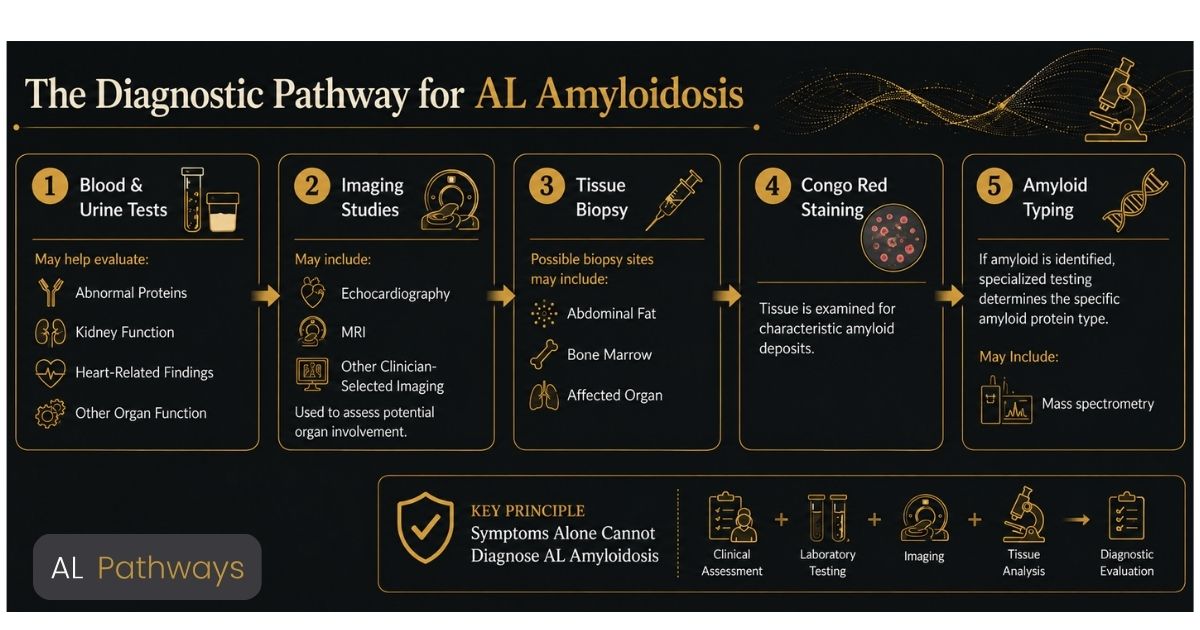
Because many symptoms associated with AL amyloidosis can also occur in other health conditions, diagnosis typically involves a combination of clinical assessment, laboratory testing, imaging studies, and tissue analysis when clinically appropriate.
The specific tests used vary depending on an individual’s symptoms, medical history, physical examination findings, and the organs being evaluated.
Blood and Urine Testing
Blood and urine tests are often used to look for abnormal proteins and assess how different organs are functioning. These tests may help healthcare professionals identify signs that warrant further investigation and evaluate whether organs such as the heart or kidneys may be affected.
Imaging Studies
Imaging tests may be used to evaluate organ structure and function. Depending on a person’s symptoms, clinicians may use tests such as echocardiography (an ultrasound of the heart), magnetic resonance imaging (MRI), or other imaging techniques to gather additional information about potential organ involvement.
Tissue Biopsy
Depending on the clinical situation, tissue samples may be obtained from abdominal fat, bone marrow, or an affected organ. The choice of biopsy site depends on the clinical picture and is determined by the healthcare team.
Biopsy samples allow pathologists to examine tissue directly and determine whether amyloid deposits are present.
Congo Red Staining
After a tissue sample is collected, it is examined in a laboratory using a specialized dye known as Congo red stain. This technique helps pathologists identify amyloid deposits within the tissue.
When amyloid is present, Congo red staining produces characteristic findings under microscopic evaluation that help confirm a diagnosis of amyloidosis.
Amyloid Typing
If amyloid deposits are identified, further testing is used to determine the specific type of amyloid protein involved. This process, known as amyloid typing, may use specialized techniques such as mass spectrometry.
Identifying the amyloid type is essential because different forms of amyloidosis have different causes and may require different clinical approaches. Mass spectrometry is one specialized method that may be used to help identify the protein type in a tissue sample. In AL amyloidosis, testing may also help determine whether abnormal plasma cells are producing excess immunoglobulin light chains.
Preparing for a Medical Appointment
Keeping organized notes can help patients and caregivers communicate concerns more clearly during medical appointments.
Tracking symptoms, weight changes, and other health developments over time may provide useful context for healthcare professionals when evaluating unexplained weight loss or other ongoing concerns.
| Information to Track Before an Appointment | |
|---|---|
| Information to Track | Examples |
| Weight Changes | Amount of Weight Lost, Time Frame, Changes in Clothing Fit |
| Appetite Changes | Reduced Appetite, Early Fullness, Difficulty Finishing Meals |
| Digestive Symptoms | Nausea, Vomiting, Diarrhea, Constipation, Abdominal Discomfort |
| Energy Levels | Fatigue, Reduced Stamina, Changes in Daily Activities |
| Other Health Changes | Swelling, Dizziness, Bruising, Numbness, or Tingling |
| Medication History | Current Medications, Recent Changes, New Prescriptions |
| Previous Testing | Blood Tests, Imaging Studies, Biopsy Results, Specialist Evaluations |
| Questions and Concerns | Symptoms, Health Changes, or Topics to Discuss With the Care Team |
Questions to Consider Discussing With a Healthcare Professional
Depending on the situation, patients and caregivers may wish to ask questions such as:
- What factors could be contributing to weight loss?
- Are additional tests or evaluations recommended?
- How should changes in appetite, digestion, or energy levels be monitored?
- Are there signs or symptoms that should be reported promptly?
- What information would be helpful to track before the next appointment?
Maintaining a clear record of symptoms and health changes can support more informed conversations with healthcare professionals and help ensure that concerns are communicated accurately over time.
Frequently Asked Questions
Can AL amyloidosis cause unexplained weight loss?
Some people with AL amyloidosis may experience unintentional weight loss. Changes in appetite, digestion, nutritional status, or overall health can contribute to weight changes, although symptoms vary considerably from person to person.
Does unexplained weight loss always indicate AL amyloidosis?
No. Unintentional weight loss can occur for many reasons, including digestive conditions, medication side effects, mental health concerns, and other chronic health conditions.
Can AL amyloidosis affect digestion?
Yes. In some cases, AL amyloidosis may affect the gastrointestinal tract and contribute to symptoms such as early satiety, nausea, bowel changes, or difficulty maintaining weight.
How is AL amyloidosis diagnosed?
Diagnosis typically involves a combination of clinical assessment and, when clinically appropriate, blood tests, urine tests, imaging studies, and tissue analysis. A biopsy is generally required to confirm the presence of amyloid deposits, and additional testing may be used to identify the specific type of amyloid protein involved.
What is Congo red staining?
Congo red staining is a laboratory technique used to identify amyloid deposits in tissue samples and help confirm a diagnosis of amyloidosis.
What is amyloid typing?
Amyloid typing is specialized testing used to determine the specific type of amyloid protein present in tissue. This helps distinguish AL amyloidosis from other forms of amyloidosis.
How can caregivers support medical conversations about unexplained weight loss?
Caregivers can help by keeping organized records of weight changes, symptoms, medications, test results, and medical appointments. Bringing clear, accurate information to appointments can support more productive discussions with healthcare professionals and help ensure important concerns are addressed.
What information should be tracked before a medical appointment?
Helpful information may include weight changes, appetite patterns, digestive symptoms, energy levels, medications, test results, and any new or worsening health concerns.
Disclaimer: This content is provided strictly for general educational and informational purposes as a baseline structural framework and does not constitute medical, legal, or professional advice, nor does it establish any doctor-patient, attorney-client, or fiduciary relationship. This material falls under strict digital health content quality standards and must never be used as a substitute for professional clinical evaluation, diagnostic screening, or specialized treatment paths; readers must always consult a licensed medical professional or specialized physician regarding any health concerns and should never delay seeking care based on this content. To the maximum extent permitted by law, the publishers, creators, and corporate affiliates (including AL Pathways) disclaim all express or implied warranties regarding the accuracy or completeness of this information and shall assume no liability or responsibility for any direct, indirect, or consequential damages, financial losses, or adverse health outcomes resulting from any reliance on, deployment of, or content generation derived from this framework, and by consuming or utilizing this asset, the user agrees to fully indemnify and hold the creators harmless from any and all legal claims or regulatory liabilities.
_________________________________________________________________
Sources:
Gastroduodenal Involvement in AL Amyloidosis: Case Report and Literature Review
Unexplained Weight Loss: Causes & Testing
Unexplained weight loss – Causes and definition – Mayo Clinic
AL – Amyloidosis Foundation
Amyloidosis – Diagnosis and treatment – Mayo Clinic
Gastrointestinal Amyloidosis: Review of the Literature – PMC
Amyloidosis – NHS
Gastrointestinal amyloidosis: A focused review – PMC
Case Report: A rare presentation of gastrointestinal amyloidosis: unmasking the hidden culprit of chronic epigastric pain and weight loss
Pathophysiology, Functional Assessment and Prognostic Implications of Nutritional Disorders in Systemic Amyloidosis – PMC
Amyloidosis – Symptoms and causes – Mayo Clinic
Approach to the Diagnosis of Amyloidosis – PMC



Comments (0)
No comments yet. Be the first to share a thought.
Leave a Comment
Your email address will not be published.