 For Patients
Newly diagnosed?
You do not have to figure this out alone. Find clear answers, practical guidance, and a community that understands what you are going through.
Patient Resources
AL amyloidosis mimics dozens of other conditions before diagnosis. AL Pathways exists to help patients, caregivers, and clinicians finally see it clearly.
AL amyloidosis happens when abnormal proteins build up inside your organs, slowly disrupting the way they work. Because it can look like so many other conditions, it often takes years to reach the right diagnosis.
Knowing what to look for changes everything.
AL Pathways is built for everyone touched by this disease. Whether you have just been diagnosed, you are caring for someone you love, or you are a clinician trying to catch it earlier, find the resources made for you.
For PatientsYou do not have to figure this out alone. Find clear answers, practical guidance, and a community that understands what you are going through.
Patient Resources For Caregivers
The people who show up every day matter just as much. Find tools, emotional support, and guidance made specifically for caregivers.
Caregiver Resources For Clinicians
Access clinical pathways, diagnostic red flags, and referral resources to help you catch it earlier and treat it better.
Clinician ResourcesSymptoms shift depending on which organs are affected, making AL amyloidosis
one of the most misdiagnosed conditions in medicine.
Breathlessness, fatigue, swollen ankles, irregular heartbeat. Present in over 70% of cases.
Foamy urine, swollen ankles, unexplained fatigue. Often mistaken for diabetic kidney disease.
Numbness, tingling, burning pain in hands and feet. Frequently misread as carpal tunnel or diabetic neuropathy.
Enlarged liver, elevated enzymes, abdominal fullness. An early clue that is easy to overlook.
Bloating, early satiety, weight loss, diarrhea. Closely mimics IBS and Crohn's disease.
On average it takes 2 to 3 years and visits to multiple doctors before AL amyloidosis is correctly identified. Here is the typical journey and where it so often goes wrong.


The good news? Treatment for AL amyloidosis has come a long way. More people are reaching remission than ever before, and new therapies are emerging all the time.

Modern regimens, often daratumumab-based, target the cells producing abnormal proteins. Many patients see rapid, meaningful responses.

For eligible patients, high-dose chemotherapy followed by stem cell rescue can achieve deep, lasting remission and give organs a real chance to heal.

Newer drugs like venetoclax target specific genetic profiles with stronger response rates. For relapsed or refractory patients, IMMX Biopharma's NXC-201 CAR-T therapy is showing results that are redefining what is possible.
AL amyloidosis is rare but the community around it is warm, knowledgeable, and growing. You do not have to navigate this on your own.
This is one of the most hopeful moments in AL amyloidosis research.
Treatments that did not exist five years ago are already changing lives.
A one-time treatment that re-engineers your own immune system to fight AL amyloidosis at its source. Disease markers normalize within days in clinical trials.
Now the frontline standard of care, dara-based combinations are delivering response rates that have genuinely transformed what's possible for newly diagnosed patients.
Several Phase II and III trials are actively enrolling. If you've relapsed or haven't responded to treatment, there may still be options worth exploring.
Real stories, expert insight, and the latest research, written for people living with AL amyloidosis and the people who love them.
 Clinical
Table of content 1.What Autonomic Dysfunction Means 2.How the Autonomic Nervous System Regulates Blood Pressure 3.How AL Amyloidosis May Affect Autonomic Nerves…
Read More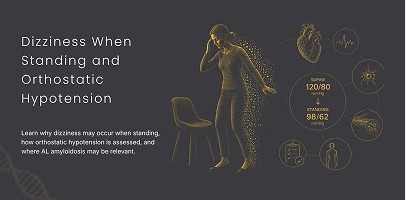 Clinical
Dizziness when standing up can be concerning, especially when it occurs repeatedly or without a clear explanation. Some people experience lightheadedness, unsteadiness,…
Read More Clinical
Table of content 1.Understanding Unintentional Weight Loss 1. 1.What is unintentional weight loss? 2. 1.Common Factors That May Contribute to Weight Loss…
Read More