
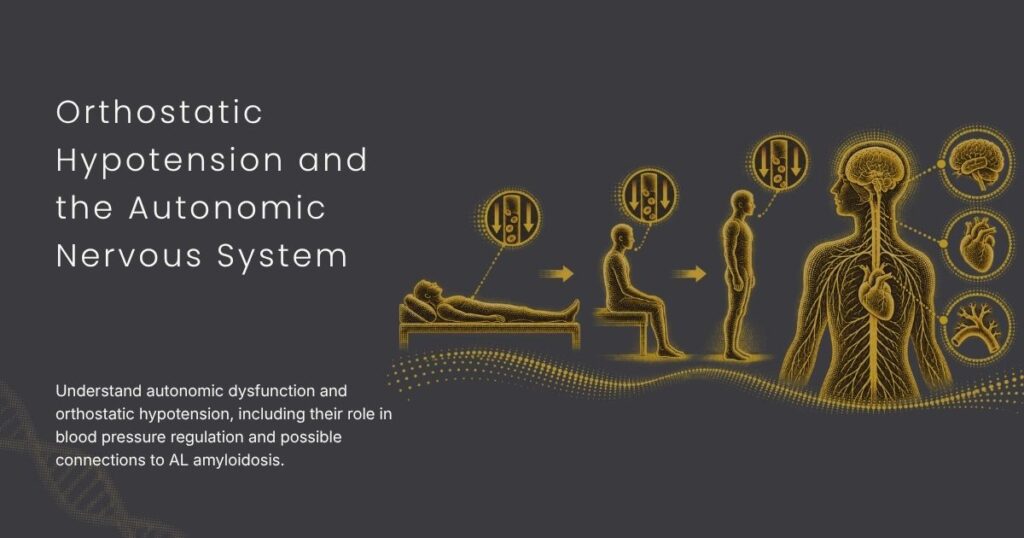
Autonomic Dysfunction and Orthostatic Hypotension
Dizziness, lightheadedness, or a feeling of instability when standing up can be concerning, especially when symptoms occur repeatedly or without a clear explanation.
For patients and caregivers, these experiences often raise questions about how the body regulates blood pressure and circulation.
One factor that may contribute to these symptoms is autonomic dysfunction, which affects the autonomic nervous system responsible for regulating involuntary functions such as heart rate, blood pressure, and blood vessel tone.
In some cases, autonomic dysfunction may be associated with orthostatic hypotension, a measurable drop in blood pressure after standing.
Autonomic dysfunction and orthostatic hypotension can occur in many different medical contexts. In some people, conditions such as AL amyloidosis may affect the nerves or organs involved in blood pressure regulation, although symptoms and underlying causes can vary considerably between individuals.
Recognizing the connection between autonomic function and blood pressure regulation can help place these symptoms into a broader health context.
Here is the Quick Answer:
- The autonomic nervous system helps regulate involuntary functions such as blood pressure, heart rate, and blood vessel tone.
- Orthostatic hypotension is a measurable drop in blood pressure after standing, commonly defined as a decrease of at least 20 mmHg systolic or 10 mmHg diastolic within three minutes.
- Autonomic dysfunction can affect the body's ability to regulate blood pressure efficiently during position changes, potentially contributing to symptoms such as dizziness or lightheadedness.
- In some people, AL amyloidosis may affect the nerves or organs involved in blood pressure regulation, although symptoms vary considerably between individuals.
- Symptoms such as dizziness, fatigue, or blood pressure fluctuations can have many possible causes and should be considered within the broader context of an individual's health and clinical evaluation.
Understanding Autonomic Dysfunction and Blood Pressure Regulation
The autonomic nervous system helps regulate involuntary functions such as heart rate, blood pressure, digestion, and blood-vessel tone. During position changes, it helps the body maintain circulation by adjusting heart rate and blood-vessel tone.
When this system does not respond effectively, blood-pressure regulation may be affected. This broad category is often called autonomic dysfunction or dysautonomia. Orthostatic hypotension is one possible manifestation, but it can also occur for many other reasons.
Orthostatic Hypotension: One Possible Manifestation
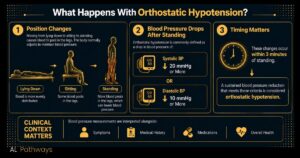
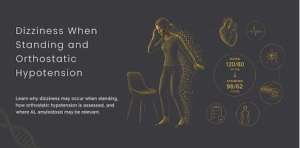
Orthostatic hypotension is a form of low blood pressure that occurs when blood pressure falls after moving from a sitting or lying position to standing.
Healthcare professionals generally define orthostatic hypotension as a sustained reduction in blood pressure occurring within three minutes of standing. Commonly used clinical criteria include:
- A systolic blood pressure drop of 20 mmHg or more
- A diastolic blood pressure drop of 10 mmHg or more
- Occurring within 3 minutes of standing
These measurements are used as part of a broader clinical assessment and are interpreted alongside a person’s symptoms, medical history, medications, and overall health.
When AL Amyloidosis May Be Relevant
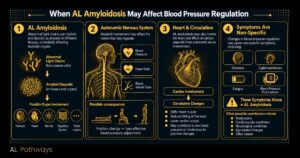
AL amyloidosis is a systemic condition that can affect multiple organs and body systems. The disease occurs when abnormal immunoglobulin light chains form amyloid deposits that accumulate in tissues, potentially affecting how different organs function over time.
In some people, AL amyloidosis may involve the autonomic nervous system, which plays an important role in regulating blood pressure, heart rate, and blood vessel tone.
Autonomic nerve involvement can affect the body’s ability to respond efficiently to position changes, potentially contributing to symptoms related to blood pressure regulation.
AL amyloidosis can also affect the heart in some individuals. Cardiac involvement may influence circulation, but symptoms such as dizziness or blood-pressure changes cannot identify the cause on their own. The specific effects vary considerably depending on the extent and location of organ involvement.
It is important to remember that symptoms such as dizziness, lightheadedness, fatigue, or blood pressure fluctuations are not specific to AL amyloidosis. These symptoms can occur in many different medical conditions and may also be influenced by medications, age-related changes, cardiovascular disorders, neurological conditions, and other factors. Healthcare professionals consider symptoms within the broader context of an individual’s medical history, examination findings, and clinical evaluation.
Related Topics to Explore
Autonomic dysfunction and orthostatic hypotension are closely connected to several broader topics involving blood pressure regulation and systemic health.
If you are looking to learn more about why dizziness can occur during position changes, you may find helpful context in Dizziness When Standing and AL Amyloidosis: What to Know, which explores the relationship between standing-related symptoms and blood pressure regulation.
For a more focused discussion of autonomic nerve involvement and how autonomic symptoms may occur in some people with systemic disease, see Autonomic Dysfunction in AL Amyloidosis and Orthostatic Hypotension.
Together, these resources provide additional educational context for understanding how autonomic function, circulation, and symptoms may interact in different clinical situations.
Discussing Symptoms With a Healthcare Professional
Symptoms such as dizziness, lightheadedness, blurry vision, or blood pressure changes can have many possible causes. Healthcare professionals typically consider these symptoms alongside a person’s medical history, medications, overall health, and any other symptoms that may be present.
Keeping a record of symptom patterns, blood pressure readings (if available), and relevant health changes may help support more informed discussions during medical appointments.
Frequently Asked Questions
What is autonomic dysfunction?
Autonomic dysfunction, sometimes called dysautonomia, refers to changes in the autonomic nervous system, which regulates involuntary functions such as heart rate, blood pressure, digestion, and temperature control.
What is orthostatic hypotension?
Orthostatic hypotension is a sustained drop in blood pressure that occurs after standing. Healthcare professionals commonly define it as a decrease of at least 20 mmHg in systolic blood pressure or 10 mmHg in diastolic blood pressure within three minutes of standing.
Can autonomic dysfunction affect blood pressure?
Yes. Because the autonomic nervous system helps regulate blood pressure, dysfunction can affect how the body responds to position changes and other daily activities.
Can AL amyloidosis affect autonomic function?
In some people, AL amyloidosis may affect nerves involved in autonomic function, potentially influencing blood pressure regulation and other involuntary processes.
Does dizziness when standing always indicate orthostatic hypotension?
No. Dizziness when standing can have many possible causes. While orthostatic hypotension is one potential explanation, similar symptoms may occur in a variety of other medical situations.
Sources:
https://www.mayoclinic.org/diseases-conditions/orthostatic-hypotension/symptoms-causes/syc-20352548
https://www.ncbi.nlm.nih.gov/books/NBK448192/
https://www.ncbi.nlm.nih.gov/books/NBK538172/
https://my.clevelandclinic.org/health/body/23273-autonomic-nervous-system
https://www.ncbi.nlm.nih.gov/books/NBK430888/
https://onlinelibrary.wiley.com/doi/full/10.1111/ncn3.12601?utm_source=chatgpt.com


Comments (0)
No comments yet. Be the first to share a thought.
Leave a Comment
Your email address will not be published.